
Article Summary Instructional alignment doesn’t mean every classroom has to look the same. This post explains the difference between alignment and uniformity and outlines the key elements schools should align, such as mastery definitions, learning progression, feedback language, and instructional structures, while still protecting teacher autonomy and creativity. Alignment often causes anxiety because it’s mistaken for uniformity. Not everything in … Read More
The Thing Most People Get Wrong About The Grid Method
TL;DR (Too Long, Didn’t Read The Grid Method is often misunderstood as a curriculum when it’s actually a mastery-based framework.This post explains what The Grid Method is and what it is not, why it was created, and how it helps teachers organize existing curriculum to support mastery learning, differentiation, and student ownership without adding more work or burning out. The … Read More
You Can’t Scale Trust Without Structure

Article Summary Trust matters in schools, but trust alone doesn’t scale. This post explains why trusting teachers without providing clear structures often leads to inconsistency, confusion, and burnout. It explores what trust without structure looks like in practice, why structure isn’t about control, and how aligned systems allow trust to actually function across classrooms, schools, and districts. Trust is essential, … Read More
Eliminating Student “Escape Routes” to Foster Accountability
TL;DR (Too Long, Didn’t Read) Students often disengage when systems allow them to opt out of learning without consequence. In this post, Chad Ostrowski explores how traditional instructional structures can create hidden “escape routes” and offers practical strategies to increase accountability, promote reflection, and foster true mastery. By removing opportunities to avoid effort, teachers can build classrooms where perseverance and … Read More
What A 70.3 Mile Ironman Triathlon Taught Me About Education
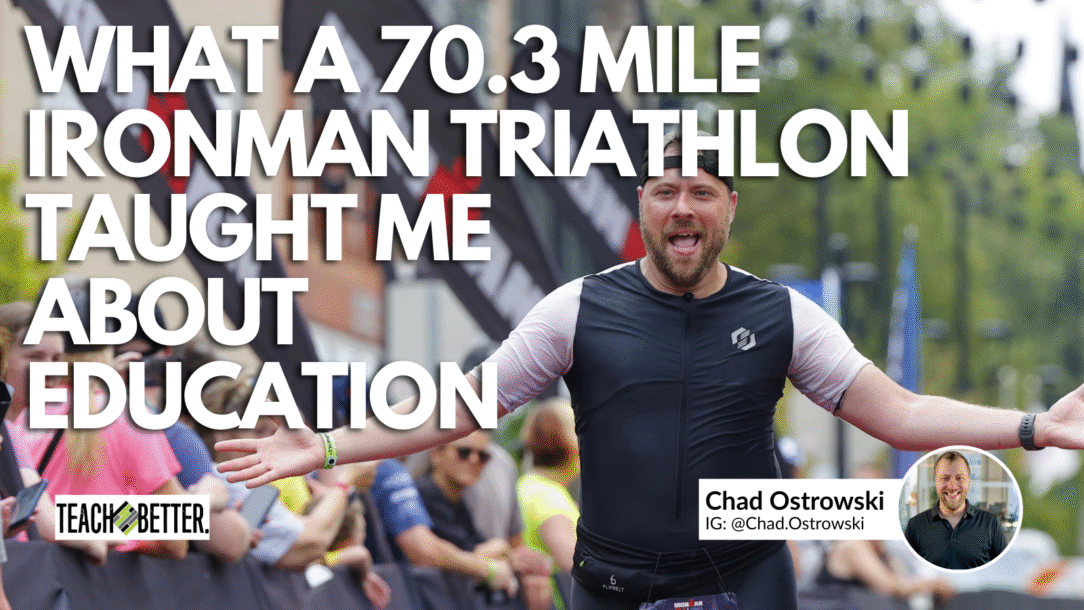
This is a long one…but I promise I have a point. As I jumped off a boat into the water, I felt prepared and ready for anything…until I didn’t. Wearing my neoprene wetsuit, swim cap, and goggles (yes, I looked as cool as you are imaging) I surfaced to one of the most traumatic and chaotic 10 minutes of my … Read More